
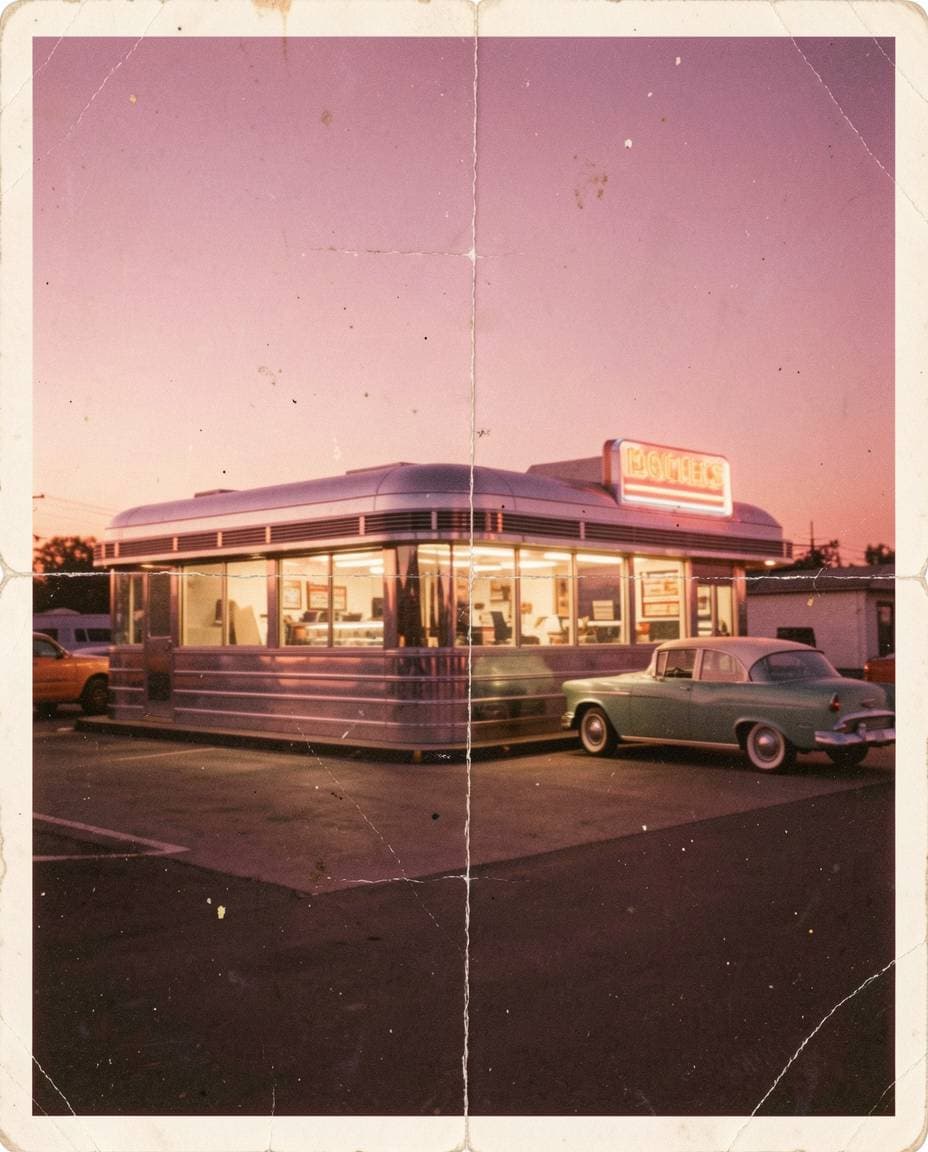
A chrome counter lined with red vinyl stools. A neon sign buzzing in the window. A jukebox glowing in the corner. Someone's grandfather had taken this photo on a road trip through the American Southwest sometime in the mid-1950s, probably with a Kodak Brownie or a similar box camera loaded with early color film. It captured a roadside diner that was pure Americana, the kind of place where you stopped for a milkshake and a grilled cheese and left with a story. The photo had been stored in a cigar box with other travel snapshots for nearly seventy years.
When Color Film Ages Badly
Early consumer color film was not built to last. The dyes used in 1950s color prints were chemically unstable, and they degraded at different rates depending on the specific pigment. Red dyes tended to persist while cyan and yellow dyes faded faster, which is why so many old color photos from this era have shifted toward a heavy reddish or magenta cast. This diner photo was a textbook case.
The entire image had shifted to a murky reddish-orange tone. The chrome counter, which should have been gleaming silver, looked like tarnished copper. The red vinyl stools had merged with the overall color cast, losing their pop against the metallic surfaces. The neon sign in the window was barely distinguishable from the wall behind it because the blues and greens that would have made it stand out had faded away almost entirely.
On top of the color shift, the surface of the print was covered in scratches. Seventy years of being shuffled around in a cigar box with other loose prints had left a network of fine and medium scratches across the emulsion. Some were deep enough to have removed the image layer entirely, leaving thin white lines where the paper base showed through. The combination of the pervasive color cast and the heavy scratching made the photo look more like an abstract painting than a snapshot of a real place.
Rebuilding the Diner: What ClearPastAI Restored
The scanned photo was run through ClearPastAI, and the AI tackled both the color degradation and the physical damage in a single pass.
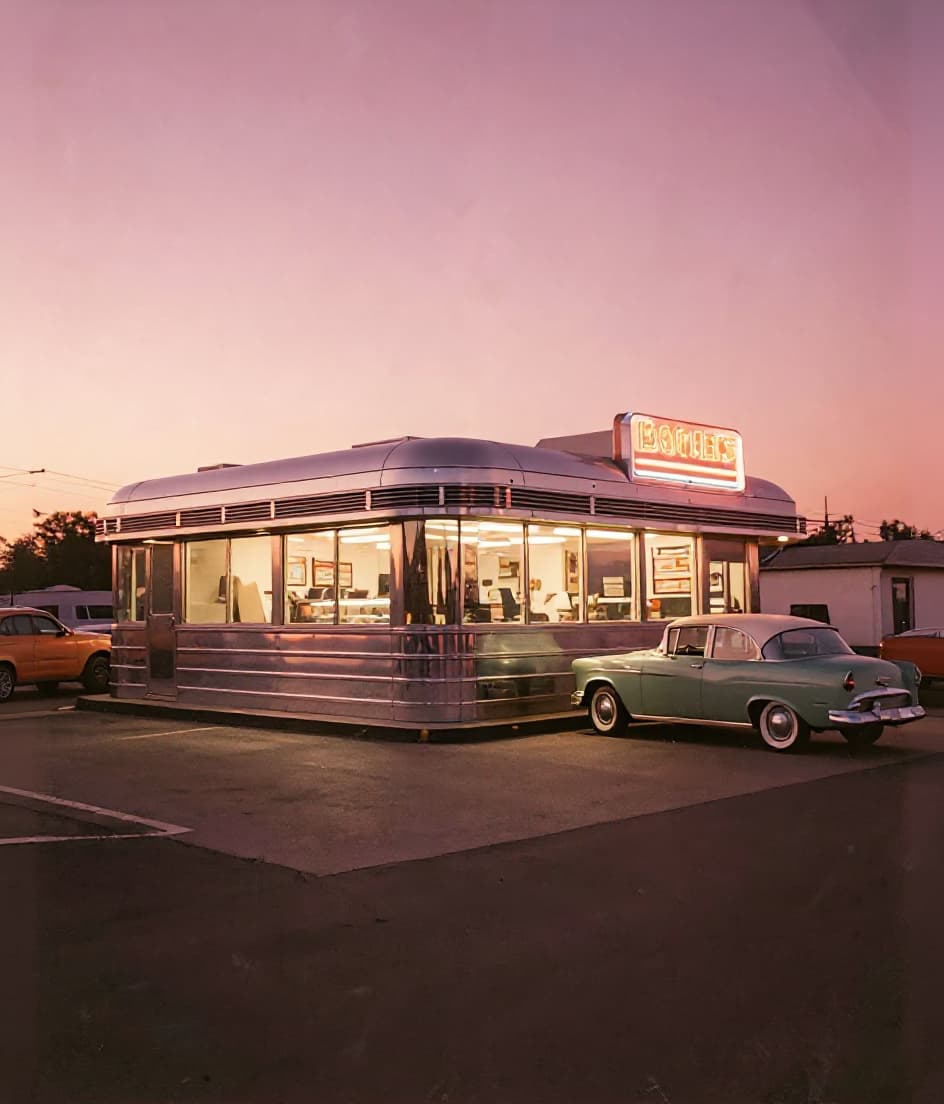
The color correction was dramatic. The reddish-orange cast was neutralized and the full color spectrum was rebuilt. The chrome counter came alive with its original silvery sheen, reflecting the overhead fluorescent lights the way polished metal does. The red vinyl stools popped against the chrome and the black-and-white checkered floor that had been completely invisible in the degraded version. The neon sign in the window glowed blue and green again, its tubes clearly traced against the darkened glass.
The scratch removal was equally thorough. Every scratch, from the fine surface marks to the deeper gouges that had cut through to the paper, was identified and repaired. The AI reconstructed the missing image content in each scratch with detail that matched the surrounding area. The chrome reflections, the texture of the vinyl, the letters on the menu board behind the counter, all were rebuilt across the damaged areas without any visible blending artifacts.
What emerged was a photograph that felt alive with the energy of 1950s America. The warm glow of the interior lighting, the gleam of the chrome fixtures, the bold red of the stools, the soft haze of the neon against the window glass. You could almost hear the jukebox and smell the coffee. The image went from being an unreadable reddish blur to a vivid snapshot of a place and time that no longer exists but now looks like you could walk right into it.
Why Vintage Americana Photos Are Worth Saving
Photos like this diner snapshot are more than personal souvenirs. They are accidental documents of a world that has largely disappeared. The roadside diners, the neon signs, the chrome-and-vinyl aesthetic of mid-century America have mostly given way to chain restaurants and modern construction. Each surviving photograph from that era is a small piece of cultural history, and when the image is damaged beyond easy viewing, that piece of history becomes inaccessible.
Many families have shoeboxes, cigar boxes, or envelopes full of travel photos from the 1950s and 1960s that have suffered the same fate as this diner image. The color shift is often so severe that people assume the photos are ruined. But the image data is still there beneath the discoloration, waiting to be recovered. AI restoration can pull the original colors back out and remove decades of physical damage, turning forgotten snapshots into images worth printing, framing, and sharing.
If you have vintage color photos from the 1950s or 1960s that have shifted to red, orange, or magenta, do not write them off. The worse the color cast looks, the more dramatic the restoration will be.
Restore Your Vintage Photos
ClearPastAI fixes color shifts, scratches, and fading in vintage color photographs from any decade. Whether your photos are from the 1950s or the 1980s, our AI brings the original colors back. Try it free on your iPhone or iPad.
Free to try. No account required.