
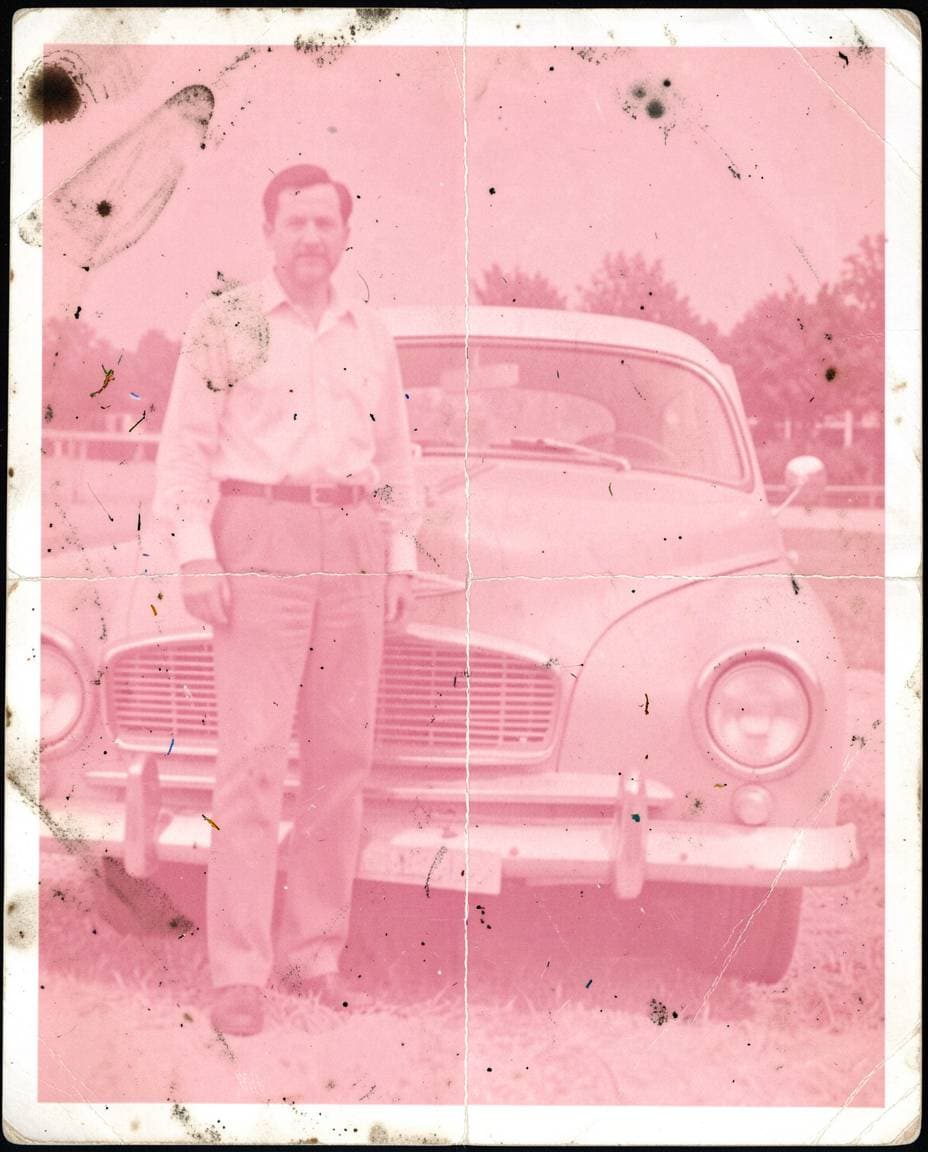
It was supposed to be the centerpiece of a garage wall display. A photograph from 1974 showing a cherry-red muscle car parked on a sunlit driveway, freshly washed, gleaming in that specific way that only Detroit steel from the early seventies could. The owner had framed it and hung it in a south-facing window of his workshop. Twenty years of direct afternoon sunlight later, the cherry red had become a pale, ghostly pink. The sky was a featureless white. The entire image looked like someone had left it in a washing machine.
How Sunlight Destroys Color Photographs
Sun bleaching is one of the most devastating forms of photo damage because it attacks the chemistry of the image itself. Color photographs from the 1970s used dye-based printing processes where three layers of color dye, cyan, magenta, and yellow, combine to produce the full color spectrum. Ultraviolet radiation breaks down these dye molecules at different rates. Red dyes tend to fade first, followed by yellow, with cyan being the most resistant. This is why sun-bleached photos often develop that characteristic blue-green cast before eventually fading to near-white.
The damage is cumulative and irreversible at the chemical level. Unlike a scratch or a tear, which leaves the surrounding image data intact, sun bleaching degrades the actual color information stored in the photographic layers. Every hour of UV exposure removes information that cannot be recovered from the physical print. The only path to restoration lies in the digital copy, where AI can analyze what remains and reconstruct what was lost.
Before and After: Bringing Back the Color
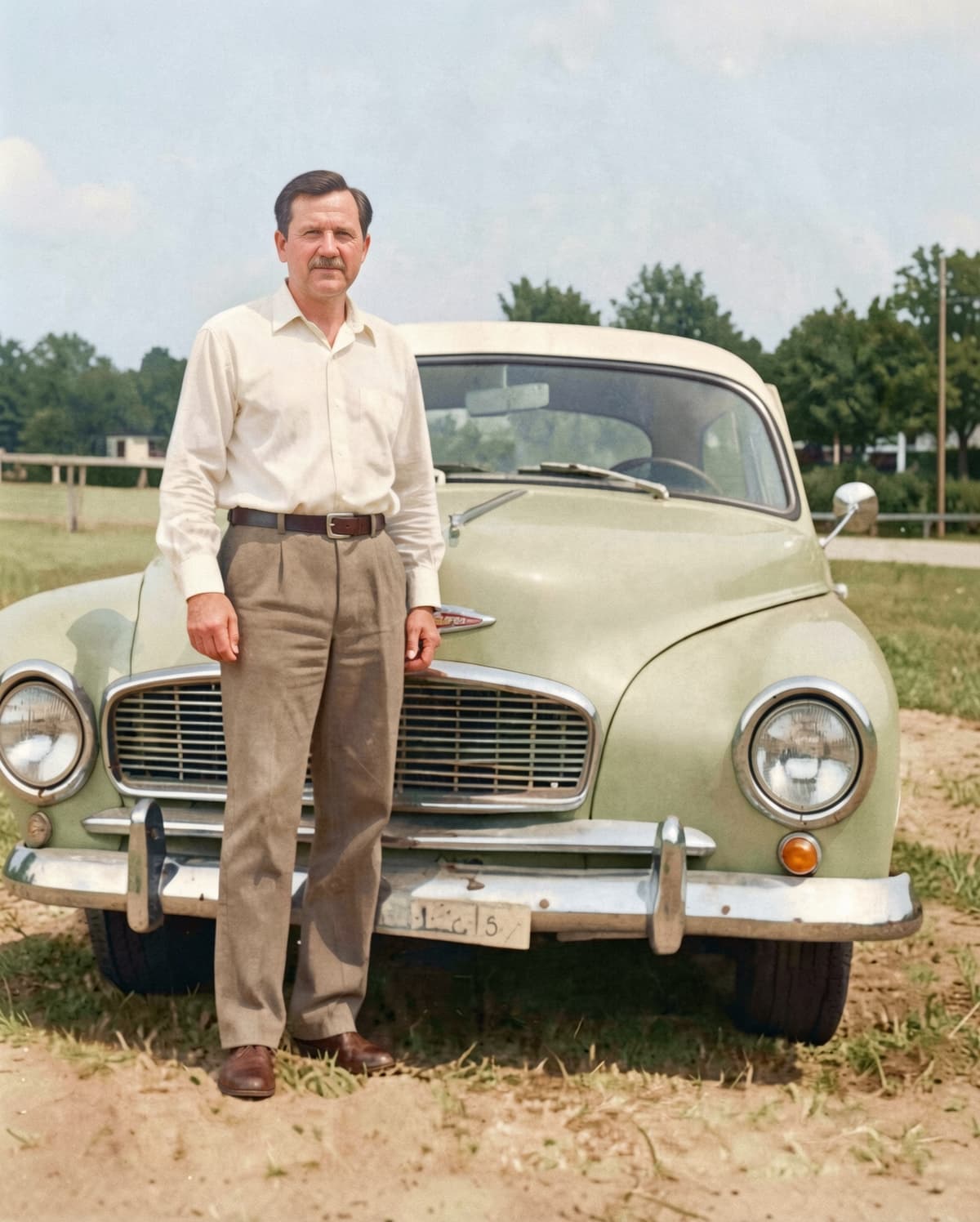
This photograph had lost nearly all of its original color saturation. The scan revealed a uniformly washed-out image where you could barely distinguish the car from the driveway. Here is what ClearPastAI produced from that faded scan.
What ClearPastAI Recovered
The AI reconstruction went far beyond simple saturation adjustment. Cranking up the saturation on a sun-bleached photo produces muddy, unnatural results because the color data itself has been destroyed unevenly across the dye layers. ClearPastAI instead analyzed the residual color information, the faint traces still embedded in the scan, and used its training on millions of photographs to predict the original color values.
The car's paint returned to a rich, saturated tone. The chrome bumpers and trim picked up realistic reflections and metallic highlights. The driveway surface differentiated itself from the surrounding lawn, which regained a natural green. The sky filled in with a believable blue gradient that matched the lighting conditions visible in the shadows. Perhaps most impressively, the subtle color variations across the car body, the way paint catches light differently on curved fenders versus flat panels, came through with convincing accuracy.
The overall contrast and exposure were corrected as well. Midtones that had collapsed into a narrow band of pale values spread back out across a full dynamic range, giving the image depth and dimension that the bleached version had completely lost.
Why This Matters to Car Enthusiasts and Collectors
For anyone who has ever owned, restored, or admired a classic car, photographs are part of the machine's history. They document a vehicle at a specific point in time: its original paint color, its factory configuration, the way it sat in someone's driveway as a daily driver before it became a collectible. Automotive historians and restoration shops use period photographs to verify original color codes, factory options, and trim configurations. A sun-bleached photo is essentially useless for that purpose.
Beyond the technical value, these images carry personal weight. The photograph in this case study belonged to a man who had bought the car new off the showroom floor. It was his first real purchase as a young adult, and that driveway photo represented a specific moment of pride. Watching the color return to the image was, in his words, like seeing it roll off the lot again for the first time.
Sun damage does not have to be the end of the story. Even photographs that appear completely washed out often retain enough residual information for AI to work with. If you have a faded print sitting in a frame or stored in a box, scanning it and running it through restoration may reveal far more than you expect.
Bring Your Faded Photos Back to Life
ClearPastAI recovers color and detail from sun-bleached, washed-out photographs that look beyond repair. Upload your faded scan and let our AI reconstruct the vivid image hiding underneath the damage. Try it free on your iPhone or iPad.
Free to try. No account required.