
Anyone who has tried to photograph children knows the fundamental challenge: they do not hold still. In the 1960s, when cameras required longer exposure times and manual focus, capturing a sharp image of a child in motion was more luck than skill. So when Susan found a photograph of her mother and uncle as children, mid-run through a backyard sprinkler in the summer of 1965, she was not surprised that it was blurry. She was just glad it existed at all.
The Problem: Motion Blur Froze the Wrong Way
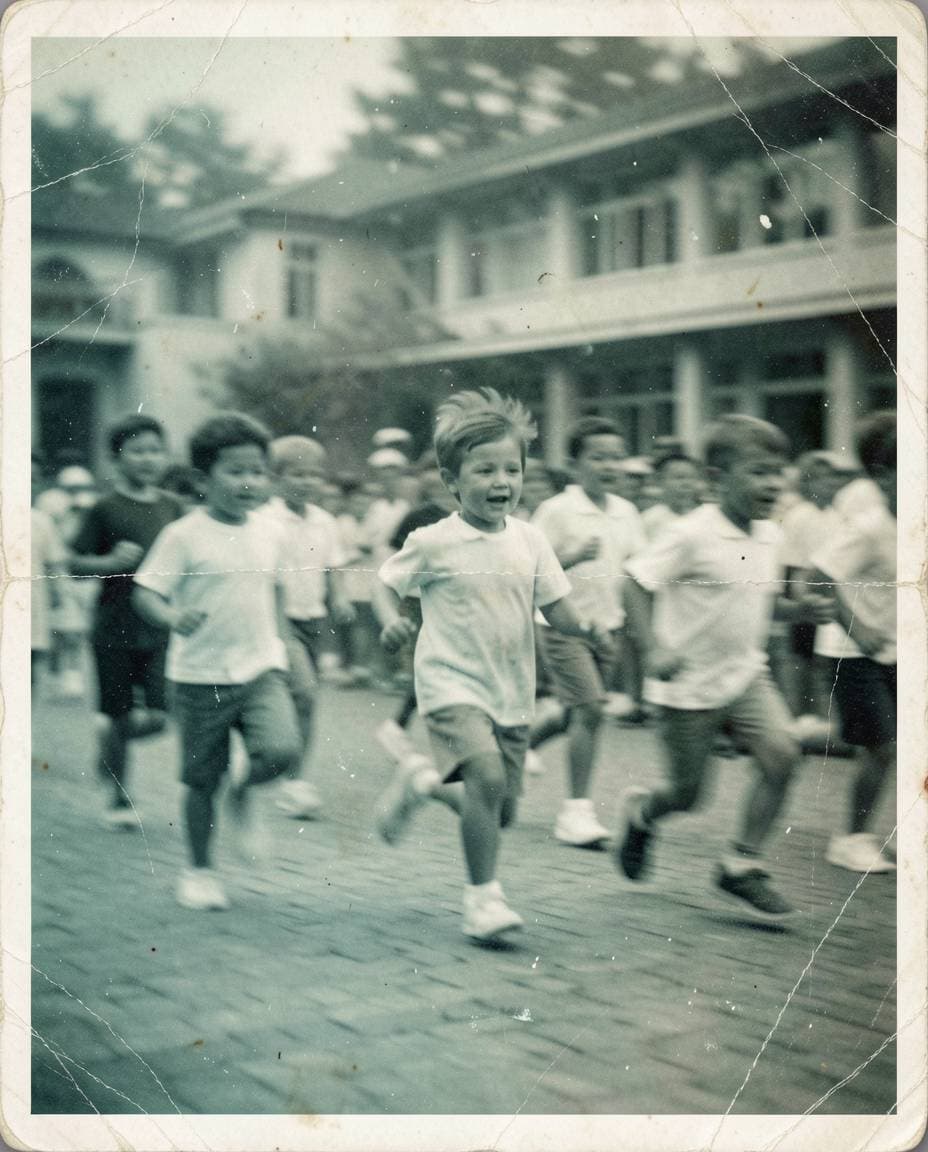
The photograph captured a wonderful moment -- two kids, maybe five and seven years old, running through arcs of water on a hot day, laughing so hard their faces were scrunched up with joy. But the camera's shutter speed was not fast enough to freeze the action. The children's bodies were smeared across the frame, their arms and legs trailing ghost-like streaks of motion. Their faces, the part of the image that mattered most, were soft and indistinct.
Motion blur happens when a subject moves during the time the camera's shutter is open. In the 1960s, consumer cameras often had shutter speeds that could not keep pace with fast-moving subjects, especially in situations where the photographer had to balance exposure for bright outdoor light. The result is an image where stationary elements like the house in the background remain relatively sharp, while anything in motion becomes a smear.
For decades, motion blur was considered essentially unfixable. Traditional photo editing could sharpen edges slightly, but it could not reconstruct detail that was never captured sharply in the first place. The information simply was not there -- or so it seemed. Susan had always assumed this photo would remain a blur, a memory she could describe but not quite see.
The Restoration: Before and After
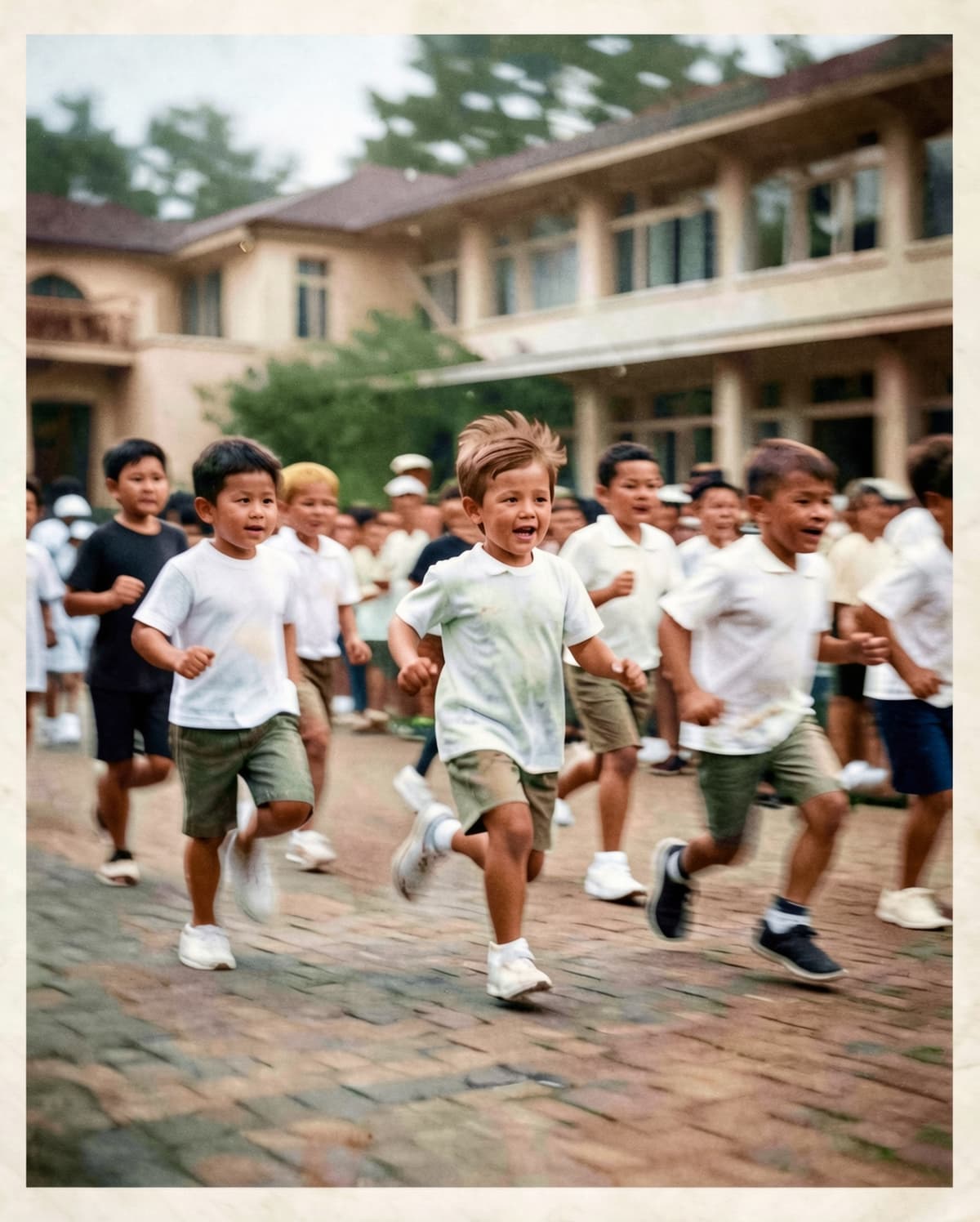
Here is the photo before and after processing with ClearPastAI. The motion blur has been significantly reduced, revealing the children's faces and the scene behind them.
What ClearPastAI Fixed
Deblurring a motion-blurred photograph is one of the most technically impressive things modern AI can do with images. The AI analyzes the direction and magnitude of the blur, then works backward to estimate what the sharp, original scene would have looked like. It is essentially solving a math problem in reverse: given this smeared result, what input would have produced it?
For this photo, ClearPastAI identified the motion vectors in the children's bodies -- the direction they were running, the arc of their arms, the splash of water around their feet -- and applied deconvolution algorithms trained on millions of images to reconstruct sharp detail from the blur. The children's faces emerged from the smear, showing expressions that had been hidden for sixty years. Their eyes, their open mouths mid-laugh, the way the older child was looking back at the younger one -- all of it became visible.
The background sharpened as well. The house, the fence, the garden hose snaking across the lawn all gained definition. Even the water droplets from the sprinkler, which had been formless streaks, took on a more defined, frozen-in-time quality. The overall image went from a vague impression of a moment to a clear window into a specific summer afternoon.
Why This Matters
Blurry photos are the ones people almost throw away. They sit at the bottom of the box because they feel like failed attempts rather than real photographs. But often, the blurriest photos captured the best moments -- the ones where people were moving, laughing, playing, and living too energetically to pause for the camera. The blur is evidence that something wonderful was happening.
Susan's mother passed away before this photo was restored. But her uncle, now in his late sixties, saw the sharpened image and immediately recognized himself. He remembered that sprinkler. He remembered that afternoon. He remembered his sister, running ahead of him as she always did. The photo had been blurry for sixty years, but the memory was sharp the whole time. Now the image matches.
If you have blurry old photos sitting in a drawer, do not discard them. The moment they captured may be more recoverable than you think.
Sharpen Your Blurry Memories
ClearPastAI uses advanced AI to deblur and sharpen old photographs that traditional editing cannot fix. Try it free on your iPhone or iPad and see the faces behind the blur.
Free to try. No account required.