
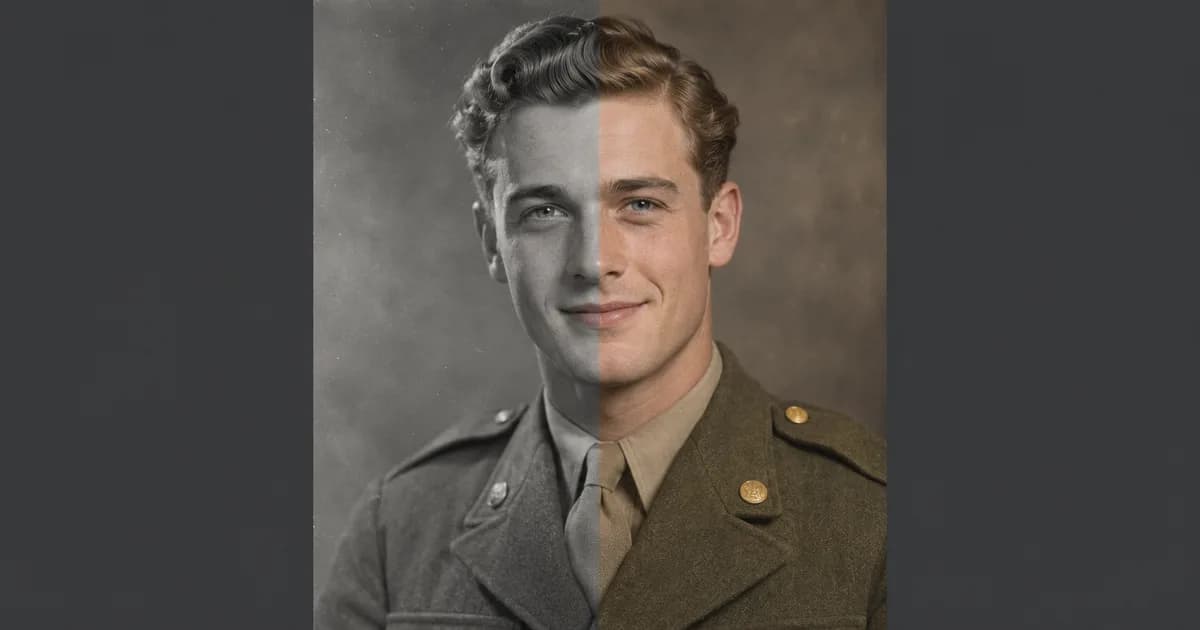
How does colorizing work? Colorizing adds color to a black and white photo while keeping its original light and shadow. Today, most photos are colorized with AI, which has learned from millions of color photos what colors things usually are. Artists can also colorize by hand, painting color onto the photo in layers after researching the real colors. Either way, the colors are well-informed guesses, because a black and white photo doesn't store color.
Here's how both methods work, how accurate the results are, and how to colorize your own old photos.
How Does Colorizing Work? The Short Answer
A black and white photo only records brightness: how light or dark each part of the picture is. Colorizing keeps that brightness and adds hue (which color) and saturation (how strong the color is) on top. The challenge is deciding which color belongs where, because a red dress and a green dress can look like the same shade of gray.
There are two main ways to make that decision:
-
AI colorization: software predicts the most likely colors in seconds.
-
Manual colorization: an artist researches and paints the colors by hand, which can take hours.
How AI Colorization Works
AI colorization uses a type of AI model called a neural network. Here's the process in simple steps:
-
Training: the model is shown huge numbers of color photos, each paired with a black and white copy of the same photo.
-
Learning patterns: by comparing the pairs, it learns which colors usually go with which shapes, textures and shades of gray. For example, it learns that the sky is usually blue, grass is green and skin has warm tones.
-
Predicting: when you give it a new black and white photo, it recognizes objects like faces, clothes, trees and sky, and predicts the most likely color for each.
-
Blending: it adds those colors while keeping the original brightness, so shadows, highlights and fine detail stay the same.
Because the AI predicts what's most likely, it does very well with things that are usually the same color (skin, sky, plants). It struggles with things that could be any color, like clothing, cars or painted walls.
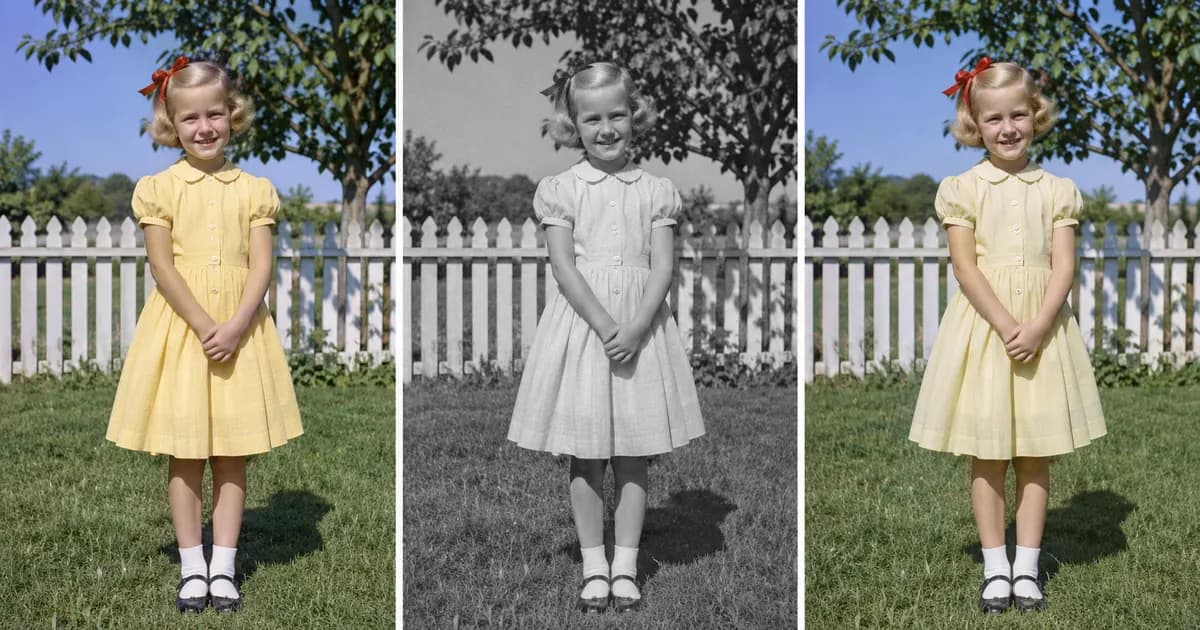 Illustrative image generated with AI.
How Artists Colorize Photos by Hand
Before AI, and still today for important photos, colorizing was done by skilled artists. The process usually looks like this:
-
Scan and repair: the artist scans the photo at high resolution and fixes scratches, dust and tears first.
-
Research: they look for real color references, such as the actual color of a uniform, a car model, a building or a flag from that time and place.
-
Paint in layers: in software like Adobe Photoshop, they add color on separate transparent layers set to blend with the gray photo. Skin alone can take many layers of pinks, yellows and blues to look natural.
-
Fine-tune: they adjust each layer until the colors match the light in the original photo.
The result can be very accurate and natural, but one photo can take hours or even days.
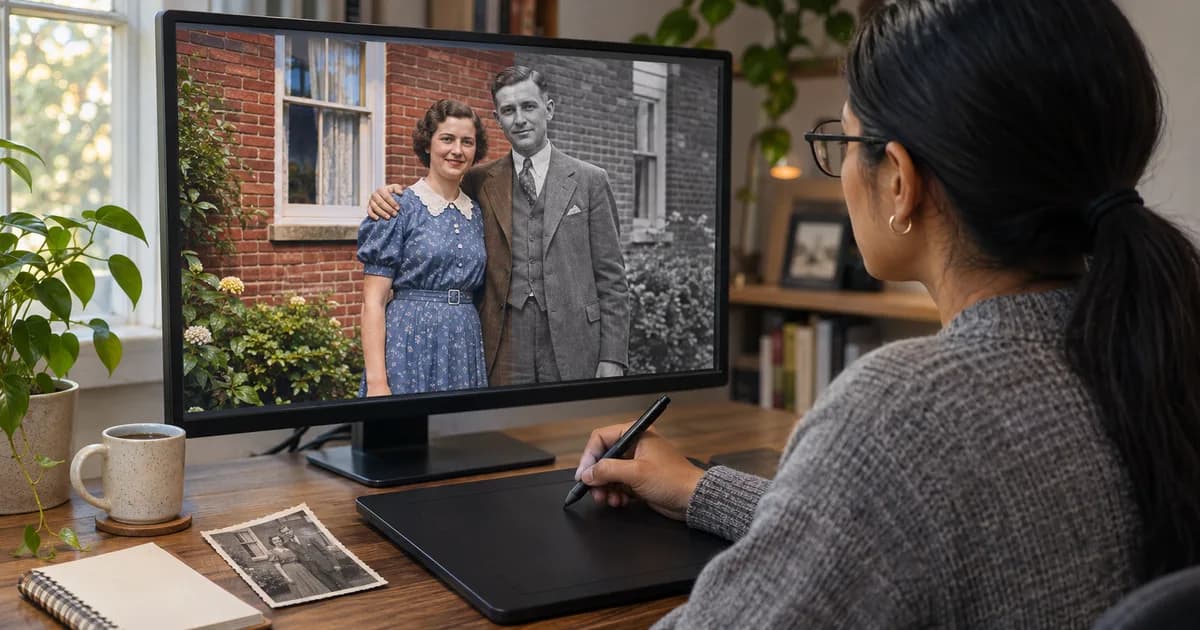 Illustrative image generated with AI.
AI vs Manual Colorizing
| AI colorization | Manual colorization | |
|---|---|---|
| Time per photo | Seconds | Hours to days |
| Cost | Free or low cost | Often paid per photo |
| Accuracy | Good for common colors (skin, sky, plants); less sure for clothing and objects | Can be very accurate when good references exist |
| Skill needed | None | Advanced editing skills |
| Best for | Family photos and quick results | Historic, museum or very important photos |
For most family photos, AI gives a natural result in seconds. If you need historically exact colors, for example for a museum or a book, a skilled artist with good references is the safer choice.
Is Colorizing Photos Accurate?
Colorized photos look real, but the colors are educated guesses. A black and white photo simply doesn't contain color information, so neither AI nor an artist can "recover" the true colors.
What makes colors more accurate:
-
Known colors: skin, sky, grass and wood are easy to get right.
-
Good references: old documents, other color photos of the same place, or family memories ("Grandma's dress was blue").
-
A clean photo: scratches, stains and fading can confuse both AI and artists, so repair the photo first.
What often goes wrong:
-
Clothing and cars can come out in the wrong color, because many colors look the same in gray.
-
Colors can look washed out if the AI isn't sure, so it plays it safe with soft tones.
Tip: if you know a real color from family memory, mention it when you share the photo, so people know which colors are accurate.
How Old Movies Are Colorized
Old black and white movies are colorized with the same idea, but frame by frame. Early films were sometimes hand-painted or tinted one frame at a time. Computer colorization of classic movies became common in the 1980s: technicians outlined areas in a frame, assigned a color to each one, and the software carried those colors forward through the following frames as people and objects moved.
Today, AI does much of this work, predicting colors for each frame while keeping them consistent from one frame to the next.
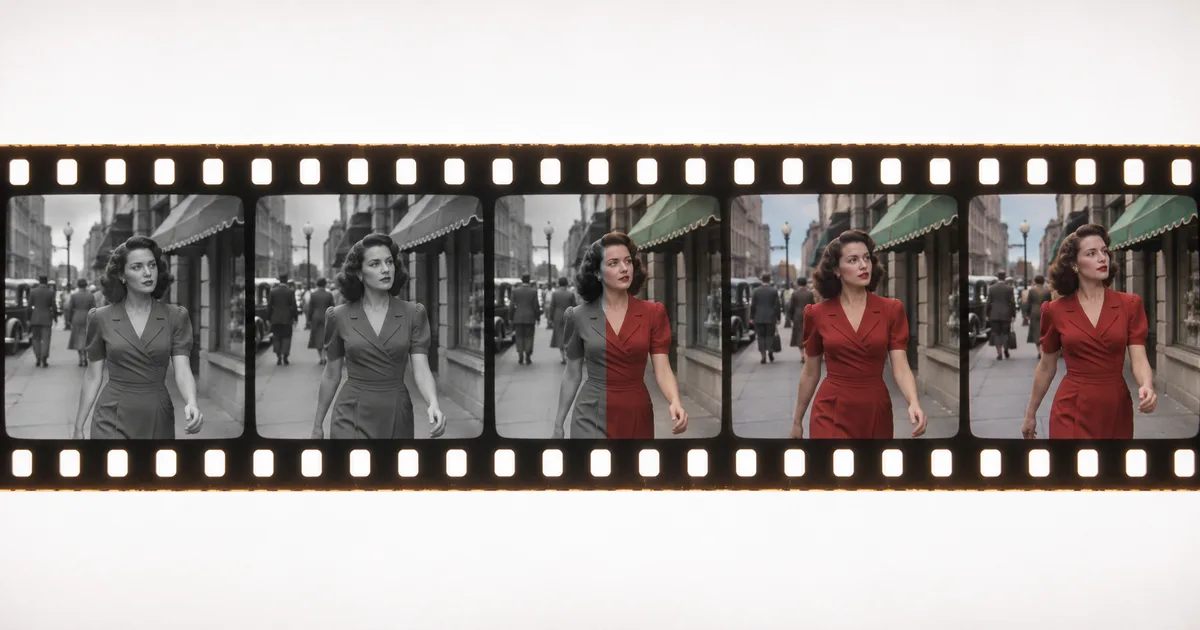 Illustrative image generated with AI.
How to Colorize Your Own Old Photos
You don't need editing skills to colorize a family photo. With an AI app like ClearPastAI:
-
Pick a photo from your camera roll. A sharp, well-lit copy gives the best result.
-
Add color. The app predicts natural colors and keeps the original detail.
-
Compare before and after, then save the result in full resolution.
ClearPastAI is free to download on iPhone, iPad and Android, with free restores every day by watching a short ad and no watermark. It can also repair scratches and faded areas before adding color. Add color in ClearPastAI.
For a detailed step-by-step guide and tips, read how to colorize black and white photos with AI.
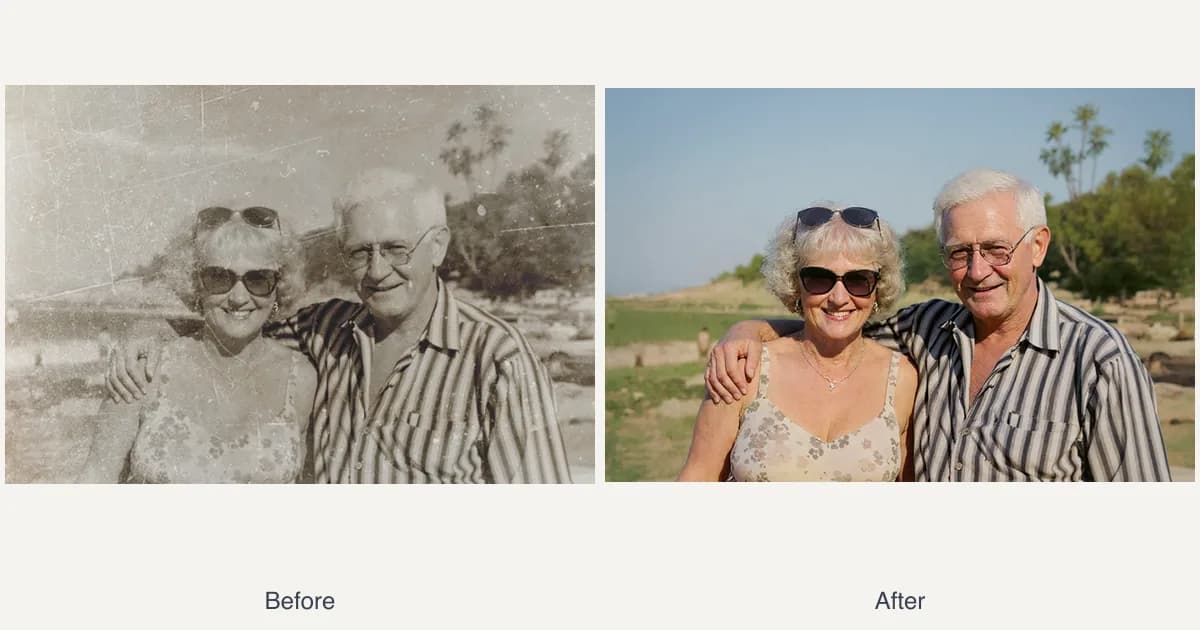 Restoration example from the ClearPastAI site gallery.
Frequently Asked Questions
How does colorizing old photos work?
Colorizing keeps the light and shadow of the black and white photo and adds color on top. AI does this by predicting the most likely colors from patterns it learned from millions of color photos. An artist does it by researching the real colors and painting them in layers.
Is colorizing photos accurate?
Not completely. Black and white photos don't store color, so all colorized colors are educated guesses. Common things like skin, sky and plants are usually right, while clothing and objects can come out in the wrong color unless there are good references.
How do they add color to old black-and-white movies?
Movies are colorized frame by frame. In the past, technicians outlined areas and assigned colors that software carried through the following frames. Today, AI predicts colors for each frame and keeps them consistent as the scene moves.
How does AI know what color things were?
It doesn't know for sure. The AI has learned from huge numbers of color photos which colors usually go with which shapes and textures, so it predicts the most likely colors. That's why it's very good with skin and sky, and less certain with clothes.
Try Colorizing Your Old Photos
Pick an old black and white photo, let ClearPastAI add natural color, and compare the before and after in seconds. It's free to download on iPhone, iPad and Android, with free restores every day when you watch a short ad and no watermark.