
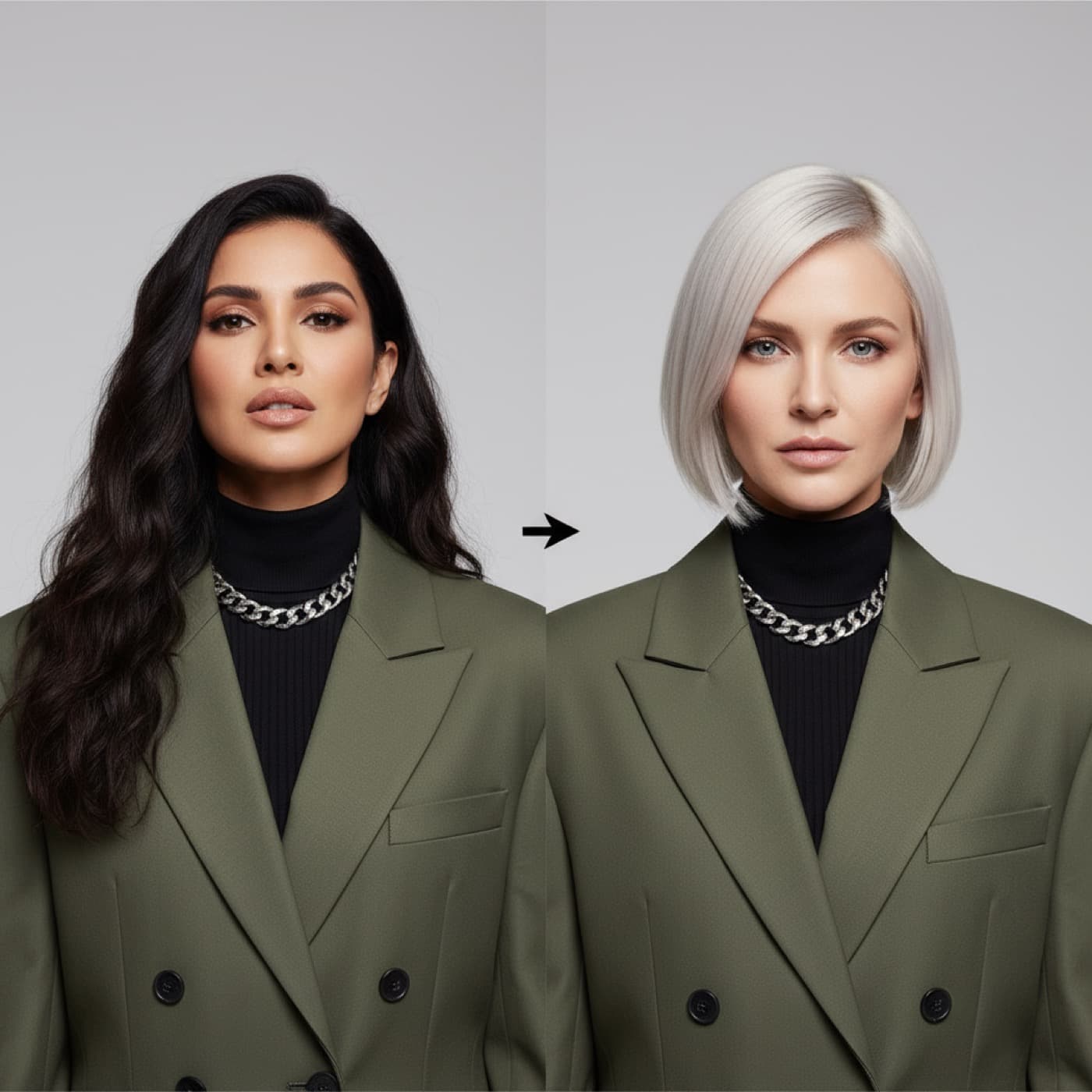
The AI face swapper used to be a TikTok filter. Three years later, it is a serious tool in fashion catalog production, film post-production, and brand marketing. The same generative models that powered viral lip-sync videos now sit inside professional creative suites, used by enterprise teams to swap faces on existing photography, localize campaigns for different markets, and maintain brand consistency at scale. Search for "face swap online" today and you will find dozens of consumer apps. Search for a professional face swap tool built for fashion catalogs and the list shrinks dramatically.
This article is a practical guide for fashion brands and e-commerce teams evaluating AI face swap technology. We cover how the technology works under the hood, what makes a face swapper fit for professional use, the ethical guardrails that separate legitimate tools from deepfake services, and a deep dive into ApparelAI Studio's AI Model Swap as a concrete example of the best AI face swapper purpose-built for fashion.
How AI Face Swap Actually Works
The simplest way to think about a modern AI face swap generator is as three coordinated tasks happening in sequence. First, the face swapper has to find the face in the source image and map out its key landmarks: the corners of the eyes, the bridge of the nose, the curve of the jaw, the position of the lips. Second, the model needs to understand the lighting on that face: the direction of the key light, the color temperature, the shadows under the brow, the highlights on the cheekbones. Third, it has to generate a new face that respects both the landmarks and the lighting, then swap that face into the source image so seamlessly that the seam disappears.
Modern face swap systems use a combination of facial recognition networks, latent diffusion models, and specialized blending algorithms. The output is a composite image where the face and often the hair come from one source, and everything else (the garment, the pose, the background, the lighting) comes from another. The quality of the result depends on how well the model handles edge cases: extreme angles, partial occlusions, unusual lighting, and the fine details around the hairline and ears that give away amateur swaps.
The leap from gimmick to professional tool happened when AI face swappers became good enough to preserve fine detail and match lighting convincingly. Earlier free face swap apps produced obviously synthetic results. Current professional systems produce results that pass casual inspection and, with care, sometimes pass closer scrutiny too.
From Viral Filter to Professional Tool
The trajectory of face swap technology has followed a familiar pattern. It started as a novelty in consumer apps, mostly used for entertainment. It then went through a period of public concern about deepfakes and misuse, which prompted both technical countermeasures (watermarking, detection models) and policy responses (platform rules, regulatory frameworks). Now it has emerged on the other side as a category of professional tools designed for legitimate workflows, with built-in safeguards against the misuse cases that defined the controversy years.
Professional face swap tools differ from consumer apps in several important ways. They are typically scoped to specific use cases (catalog photography, film, anonymization for research) rather than open-ended identity manipulation. They restrict source material to images the user owns or has rights to. They build in tracking and audit features that make misuse harder. And they are priced for business use rather than for viral entertainment.
Where AI Face Swap Adds Real Value
Setting aside the controversial applications, AI face swap has earned a legitimate place in several professional workflows.
Film and Entertainment
Major studios use face swap and related technologies for de-aging effects, performer doubles, dialogue replacement when on-set audio is unusable, and continuity fixes when actors are unavailable for reshoots. The technology is also used to localize dubbed content by matching lip movements to the dubbed audio, which dramatically improves the viewing experience for international audiences.
Education and Research
Privacy-sensitive research datasets often use face swap to anonymize subjects while preserving the rest of the image for analysis. Medical imaging research, behavioral studies, and surveillance technology research all benefit from being able to share visual data without identifying individuals.
Marketing and Localization
Global brands face a recurring problem: campaign imagery shot for one market often does not resonate in another. Re-shooting a full campaign for every region is expensive, but using AI face swap to adapt the same campaign with regionally appropriate models is fast and cost-effective.
Fashion Catalog Production
This is the use case we focus on in the rest of this article. Fashion has specific requirements that make AI face swap especially valuable: a need for catalog consistency across thousands of SKUs, regular re-casting decisions, and a recurring tension between the cost of human model shoots and the demand for fresh imagery at scale.
Why Fashion Has Unique Face Swap Requirements
Generic face swap apps and free online face swappers fail at fashion catalog work for several reasons. Catalog imagery has to look professional, not novelty. The face swap has to preserve the garment, the pose, the lighting, and the background exactly. Any visible artifact, even a slightly misaligned hairline or a subtle color shift, gets noticed when the image is on a product page next to other product photography.
Fashion also has an unusual consistency requirement. A single catalog might contain thousands of images, and the brand needs them to feel cohesive. That means using the same face across many shoots, often the same body silhouette too, and definitely the same overall aesthetic. Most face swap generators produce a different result every time you swap faces, which fails this requirement immediately.
Finally, fashion has rights and licensing complications that face swap can resolve elegantly. Stock photography licenses often restrict commercial use. Agency model contracts may be limited to specific markets or time periods. AI face swap lets brands replace those constrained faces with brand-owned alternatives, dramatically simplifying the rights picture for ongoing catalog use.
Spotlight: ApparelAI Studio's AI Model Swap
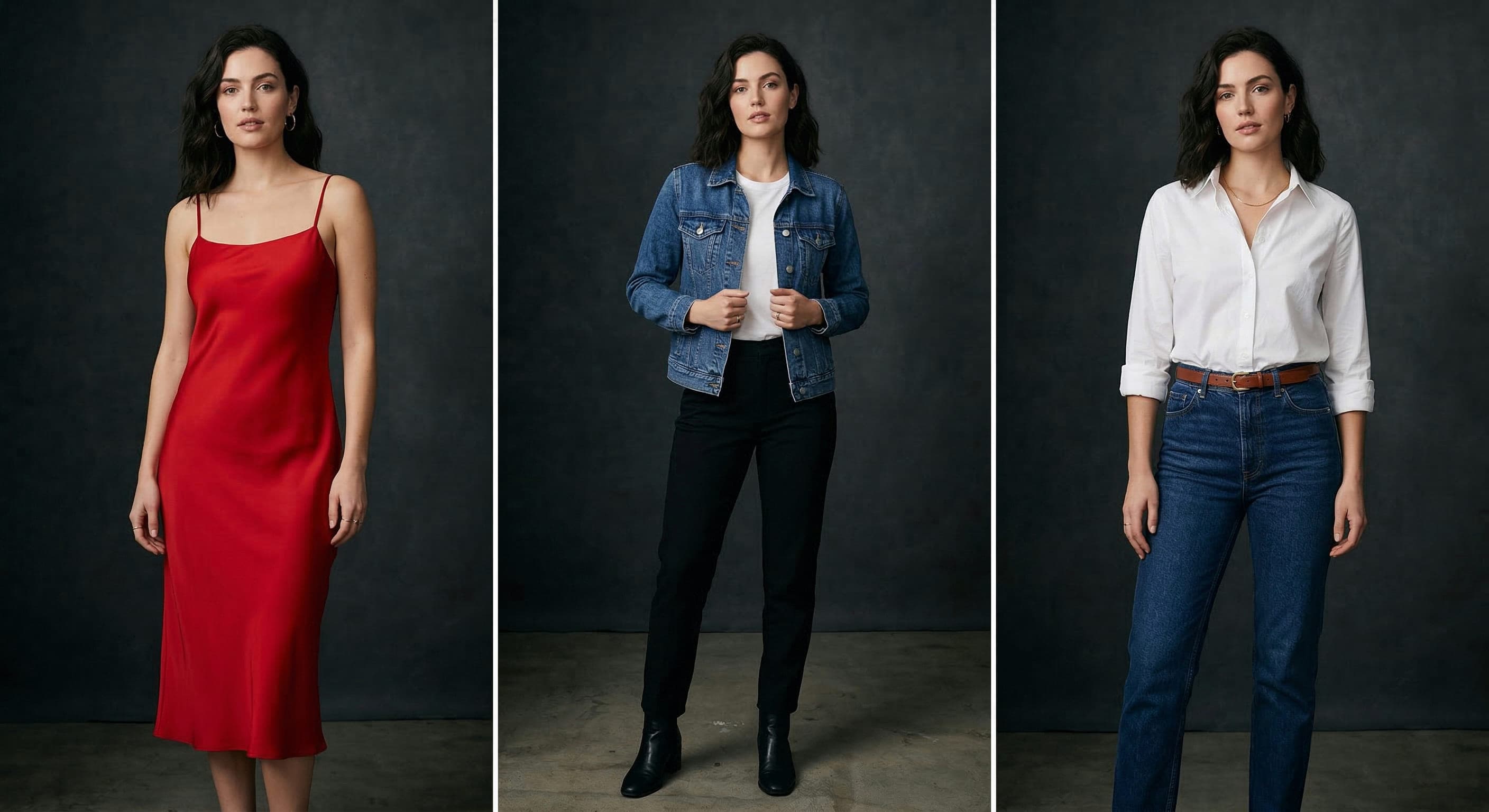
AI Model Swap is the fashion-specific face swapper inside ApparelAI Studio. Functionally, it takes any existing model photo (your own, a licensed shot, an older catalog image) and swaps the face and hair while preserving the garment, the pose, the background, and the overall composition.
What makes it different from generic face swap apps and free online face swappers is the source of the new face. ApparelAI Studio is built around a feature called the persistent brand model: a custom AI-generated face that you create or upload once, and that becomes your brand's signature look across every shoot. Model Swap pulls from that brand model, so every time you swap a face you get the same recognizable identity. This solves the catalog consistency problem in a way no consumer face swap generator does.
The output preserves everything that matters in fashion imagery. Garment drape, fabric texture, pose, lighting, background. The only change is who the viewer sees wearing the clothes. From the customer's perspective, the brand has a recognizable model fronting the catalog, the same way Calvin Klein had Kate Moss or Tommy Hilfiger has its faces. The difference is that the brand owns the model entirely, rather than licensing it from an agency.
Three Real Workflows Fashion Teams Use
Workflow 1: Re-Casting a Legacy Catalog
Many brands have years of accumulated catalog imagery featuring models who are no longer under contract, no longer aligned with the brand direction, or simply not part of the current visual identity. Re-shooting that imagery from scratch would cost hundreds of thousands of dollars. AI Model Swap lets a brand re-cast the entire back catalog onto its current brand model in a fraction of the time and cost. The garments and compositions are preserved exactly. Only the face changes.
Workflow 2: Regional and Demographic Localization
A global campaign shot in New York with a Western model can be adapted for regional markets by swapping in regionally appropriate brand models. The composition stays the same. The model changes. This is a controlled, brand-led version of localization that respects local audience preferences without requiring multiple full campaign productions.
Workflow 3: Transitioning to AI-First Catalog Production
Brands moving from human model shoots to AI-generated catalog imagery face a transition problem: their existing image library features human models, but new images use AI models. The catalog feels inconsistent during the transition period. AI Model Swap lets brands bridge that gap by swapping the human faces in the existing library for the AI brand model, instantly aligning the back catalog with the new production direction.
Ethical Considerations and Responsible Use
Any honest discussion of AI face swap has to address the misuse cases. Face swap technology can be used to create non-consensual imagery of real people, impersonate public figures, and deceive audiences in ways that damage trust. These are real harms, and the technology industry is right to take them seriously.
Professional face swap tools address these concerns through their design choices. ApparelAI Studio's implementation is explicitly designed for brand-owned face swaps. The donor face is a model the brand has created or licensed for this purpose, typically a synthetic AI model rather than a real person. The tool is not built to swap in the faces of celebrities, employees, or arbitrary individuals. Misuse for non-consensual identity manipulation falls outside its intended use case and against its terms of service.
For brands using AI face swap responsibly, the practical guardrails are straightforward. Use only faces you have rights to. Disclose AI involvement where transparency builds trust with your audience. Avoid using face swap to impersonate real public figures, employees, or anyone who has not consented. Use it to make production more efficient, not to deceive.
Step-by-Step: Using AI Model Swap
Step 1: Sign Up Free
Create a free ApparelAI Studio account. The free tier supports trying the tool on a small number of images without a credit card. This is enough to see whether the output meets your quality bar before committing to a paid plan.
Step 2: Upload Your Source Photo
Drag in the existing model photo you want to re-cast. This can be a previous catalog shot, a licensed agency photo, or any image you have rights to. The garment, pose, and background will be preserved.
Step 3: Select Your Donor Face
Choose either your persistent brand model or another donor face you have created. The tool extracts the facial geometry and applies it to the source image while matching lighting and angle automatically.
Step 4: Review and Download
The output is typically ready within seconds. Review the result for hairline accuracy, lighting match, and overall realism. If something looks off, generate again with adjusted parameters. Download the final image in high resolution, ready for catalog use.
ApparelAI vs Generic Face Swap Tools
The differences between a consumer face swap app and ApparelAI Studio's Model Swap matter for professional use:
- Consistency. Consumer apps generate a different look each time. ApparelAI pulls from a persistent brand model for reliable catalog-wide consistency.
- Quality. ApparelAI is trained on fashion imagery, handling hair, makeup, jewelry, and high-resolution detail in ways generic tools do not.
- Integration. Model Swap lives alongside ghost mannequin, background remover, outfit builder, and the other tools in the ApparelAI suite. Workflows chain naturally.
- Ethics and rights. The tool is scoped to brand-owned faces, with terms of service designed to prevent the misuse patterns associated with consumer face swap.
- Output specs. Catalog-ready, marketplace-compliant images by default. No watermarks on paid tiers, full resolution, color-managed.
Frequently Asked Questions
What is the best AI face swapper for fashion brands?
For fashion catalog production specifically, the best AI face swapper is one trained on fashion imagery, integrated with a persistent brand model system, and designed for brand-owned face workflows. ApparelAI Studio's AI Model Swap is purpose-built for this use case, which is why we focus on it here. Generic face swap tools optimized for selfies and entertainment fall short on the consistency, quality, and rights-management requirements of professional catalog work.
Is there a free AI face swap tool I can try?
Yes. ApparelAI Studio offers a free tier that includes access to the AI face swap feature, with no credit card required. You can swap faces on a small number of images per month to test the quality before upgrading. Most consumer free face swap apps are limited to entertainment use; ApparelAI's free tier is specifically usable for evaluating professional catalog workflows.
How do you swap faces in fashion photos without ruining the garment?
The key is using a face swapper that isolates the face and hair region cleanly while leaving the garment, pose, and background untouched. ApparelAI's Model Swap is engineered for this, so the clothing, fabric drape, lighting on the garment, and background composition all stay identical to the source image. Only the face and hair change.
Can I use AI face swap to swap faces between photos online?
Yes. ApparelAI Studio is a web-based AI face swap online platform, so you can upload your source photo, select your donor face, and download the result entirely through the browser. No software installation required. Mobile apps are also available on iOS and Android.
How is this different from a deepfake?
The technical foundation is similar, but the use case and ethics are entirely different. Deepfakes typically involve swapping a real person's face onto another body without consent, often to deceive viewers. Brand-owned AI face swap uses synthetic or licensed faces controlled by the brand, applied to images the brand owns, to maintain catalog consistency. The tool design, terms of service, and intended use cases for ApparelAI's Model Swap are scoped to prevent the misuse patterns associated with deepfakes.
The Bottom Line
AI face swap has matured into a serious professional tool. For fashion brands specifically, the technology solves three structural problems at once: the cost of re-shooting legacy catalog, the complexity of regional localization, and the difficulty of maintaining visual consistency across thousands of SKUs. The combination of face swap with a persistent brand model concept, which ApparelAI Studio implements as a built-in feature, is what unlocks the professional use case.
The technology demands responsible use. Brands that adopt it should be clear about whose faces they are using, why they are using them, and how they communicate AI involvement to their audience when it matters. Done responsibly, AI face swap stops being a controversial gimmick and becomes another tool in the production stack, alongside ghost mannequin generation, background replacement, and outfit composition.
For brands ready to test the technology on real catalog work, the fastest path is to try Model Swap free on a single image. Five minutes is enough to see whether it meets the bar.
Try AI Model Swap Free
Re-cast any existing model photo onto your brand-owned AI model. No card required, output in seconds.